GWEN WISNIEWSKI
  • Home
  • Services
    • How Can We Help?
    • Hourly Consulting & Landscape Evaluations
    • DIY: Do It Yourself Landscape
    • Landscape & Garden Design
    • Nursery Owners-increase your sales and installations.
    • Designs & Consulting for Landscapers
  • Gallery of Designs
    • DESIGN ON DIY NETWORK
    • Hillsides
    • Front Yard
    • Back Yard
    • Hardscape
    • Public / Commercial
    • Drafting Board
  • Contact
  • Garden Inspiration Blog Menu
  • About
  • Service Plans and Fees
  • Service Area
  • Landscape Questionnaire
  • Gardening Tools

Fall is for Planting Bulbs:  Tips for planting and protecting your bulbs

10/1/2020

2 Comments

 
Picture
Photo: Bucks Country Gardens
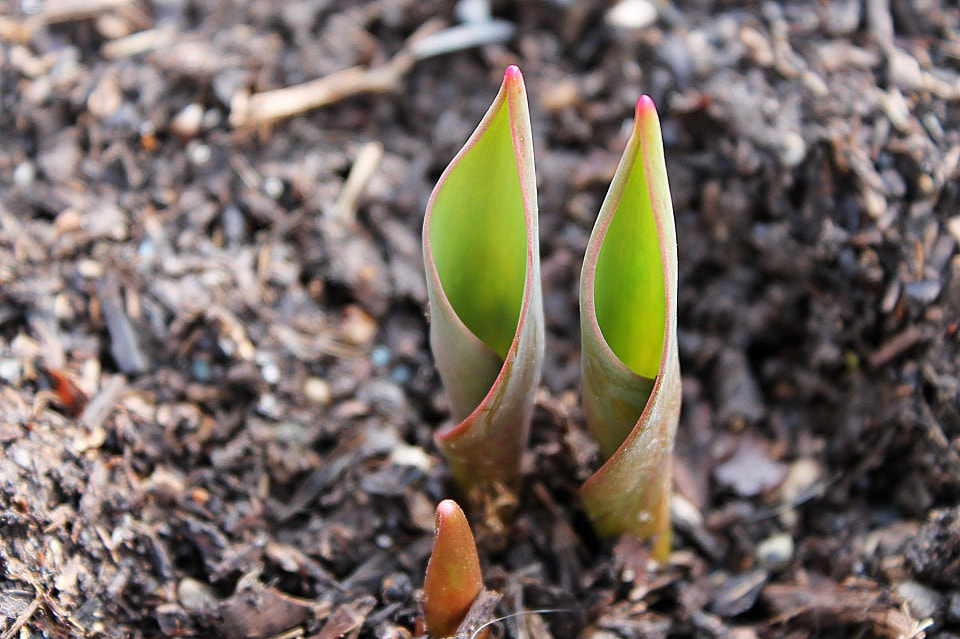
Hope springs eternal when the gardener spies the first green sprouts of the crocus.  Amongst the backdrop of drab greys and browns, the bright green almost looks like a color image superimposed onto a black and white photograph. Do you have flowering bulbs in your gardens that will greet you with their optimistic green shoots next spring?  Bulbs are a breeze to plant, and don’t require your attention for most of the year. Flower bulbs are one of nature’s miracles; everything they need to bloom is contained in the bulb. Fall is the time to plant.  To ensure bulbs are protected from critters, here are some tips.   
Avoid Tasty Treats
Picture
Picture: Georgia Center for Urban Agriculture
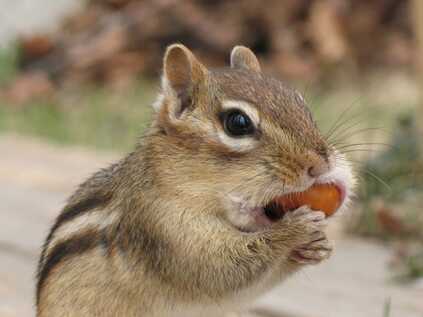
There’s nothing more discouraging than to discover that chipmunks, squirrels, deer, skunks (yikes!,) dogs or cats have unearthed our bulbs.  The simplest strategy is to plant bulbs they dislike:  daffodils, alliums, hyacinths, gritillaria, and snowdrops. 

Hide your Tracks
Picture
Picture: Grown By You
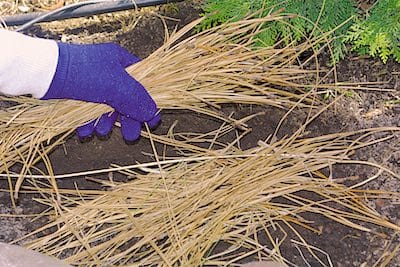
Disguise any clues that something tasty is in the ground.  Chipmunks are territorial and squirrels are curious, and freshly dug soil invites investigation.  Spreading mulch will help hide the evidence of newly planted bulbs.   Recent studies have proven that adding bone meal to the planting hole in fact encourages critters.  Instead, work some slow-release fertilizer into the planting hole.

Block Intrusion
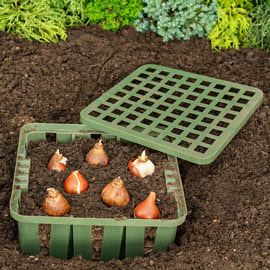
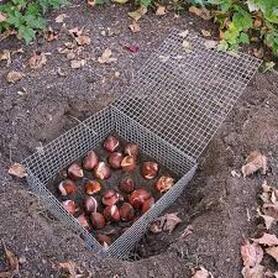
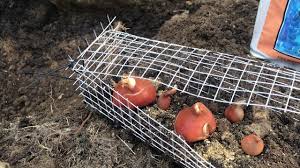
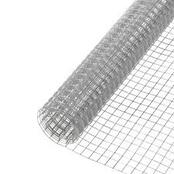
Plant bulbs inside a wire or plastic cage.  These are effective, but can be costly if you are planting many bulbs.  A plastic cage that holds 6 bulbs costs about $7. You can build your own (link) using 2” mesh such as chicken wire.  While this will deter digging, it is not full proof.  Hardware cloth is another alternative, though it is much more difficult to work with.
Picture
Picture: Gardens Alive
Picture
Picture: Amazon White Flower Farm
Picture
Picture: Coast Maine Organic Products
Picture
Hardware Cloth Picture: Home Depot

Use Repellent
Picture
Picture: Longfield Gardens
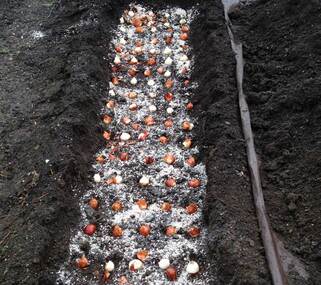
You can purchase repellent or use crushed stone or oyster shells.  The gritty texture deters digging and chewing. To use, sprinkle in the hole both under and over the bulb when planting. Feed stores usually carry crushed oyster shells.  Purchased repellents only last for a specific period of time, so the crushed stones or shells is a longer- term solution. In addition to deer repellent, spreading granulated garlic or crushed pepper flakes will discourage snacking.

Deer
If you love tulips like I do, I consider it a challenge worth facing.  Deer, rabbits, squirrels, groundhogs and often chipmunks will race to nibble your delectable tulips.  You can and should use all of the above strategies to preserve tulips.  If deer graze in your yard, planting bulbs in pots rather than flower beds is a smart choice.  I  keep the pots in a cold garage or shed. They need 12 weeks of cold chilling to bloom properly. In early spring bring them onto patios, decks, or porches away from these hungry animals.  If these pots are still at risk, use deer spray repellent on new growth.  I recommend using the concentrate and mixing it slightly stronger than recommended.  Tulips often diminish in flowering over time, so I treat them as an annual.  
Picture
Photo: Bucks Country Gardens

Planting Tips
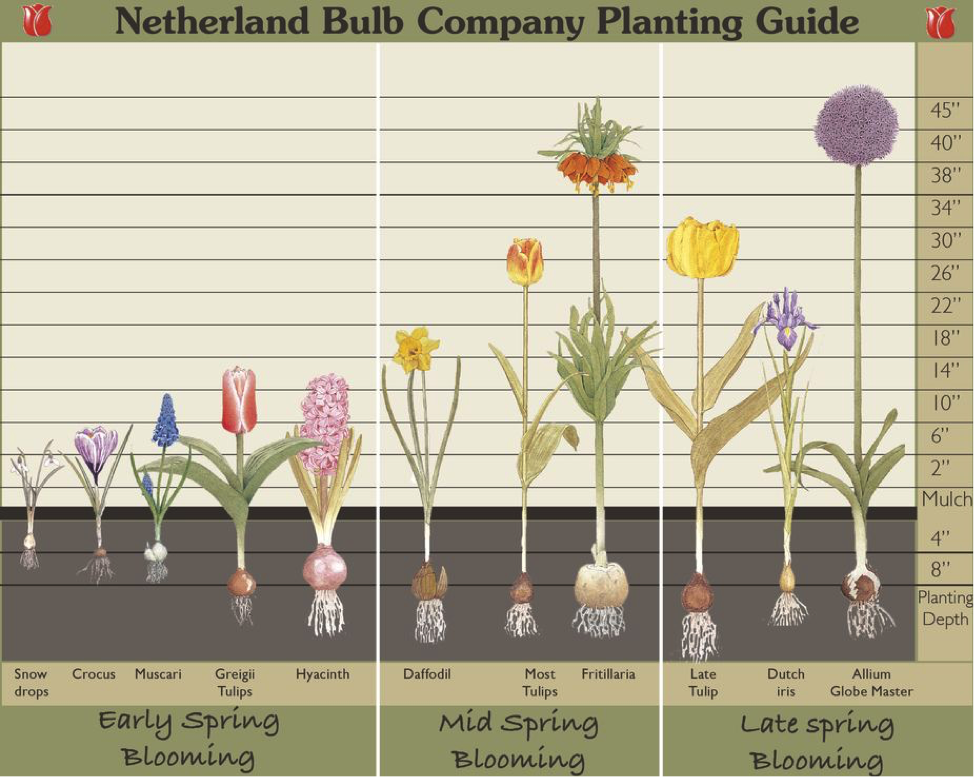
  • Follow depth and spacing guidelines for bulbs.  Bulbs planted too shallow or deep may not bloom or may freeze in the winter.
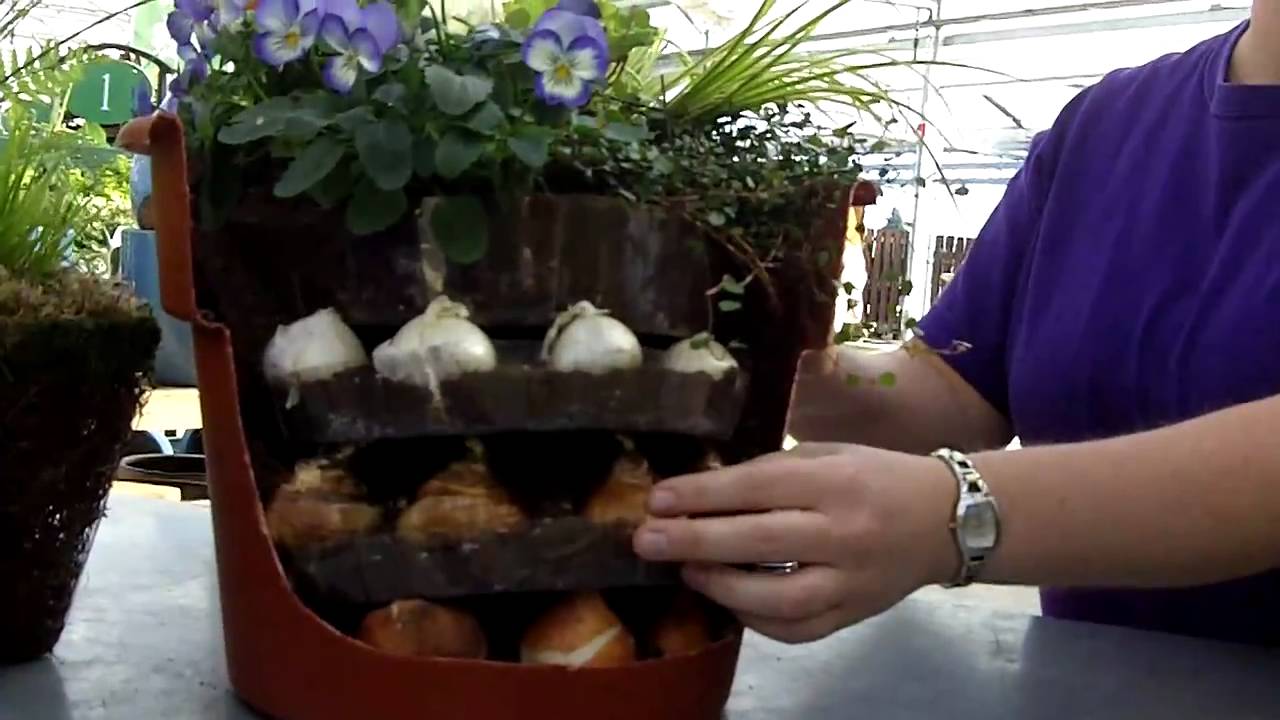
  • Bulbs look best when planted in groups of 7-10 in a single hole.  Massed groupings among shrubs, in pots, or entrances add a pop of color.
  • Avoiding water logged soil prevents fungus, disease and rot.
  • Be attentive to light requirements.  Plants that don’t get the right amount of sun will deteriorate over time.
  • Consider over-planting bulbs with ground cover, ornamental grasses or other perennials to mask the messy leaves after blooming.  Bulbs will grow through the perennials in the spring.  Snow-in-Summer, Creeping Phlox or Baby’s Breath, perennial Geraniums, and Forget-Me-Knots are some that I use both in my yard and client designs.
  • Do not cut back leaves after blooming, because they are used to create food for the bulb.  Summer blooming perennials start to sprout and spring bulbs end their season.  Perennials to plant in front of bulbs include dwarf ornamental grasses, daylilies, salvia, lavender, liatris, and dwarf Russian Sage.
  • Some bulbs, especially daffodils, will naturalize by multiplying.  You may notice a decline in bloom if the bulbs become crowded.  Digging and separating the clumps will result in more healthy bulbs with more consistent blooms.  
  • Not all bulbs should be planted in the fall. Dahlias and gladiolus should be planted in the spring, for instance, while daffodils and tulips do well when planted in late summer or early autumn. Here is the rule of thumb: If you are planting a bulb that blooms in the spring, plant it in the fall. For bulbs that bloom early summer or later, plant them in the spring.
Picture
Photo: Netherland Bulb Planting Guide
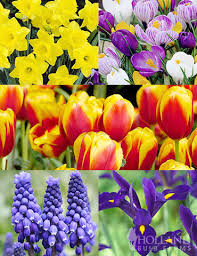
The month of October is the perfect time to plant spring-flowering bulbs.  Just follow my instructions to ensure they are not disturbed by curious critters.  For a small investment in time and money, you will be rewarded for years with cheerful pops of spring color. 
Picture
Picture: Holland Bulb Farm
2 Comments
Andy
10/5/2020 05:02:39 pm

Great Blog!!!

Reply
Michelle link
1/7/2022 02:36:57 am

Great Article! Thank you for sharing this is very informative post, and looking forward to the latest one.

Reply

Your comment will be posted after it is approved.


Leave a Reply.

    Thank you for finding us! Holly and I have collaborated to bring you informative, fun, and seasonal garden inspiration blogs.

    ​Subscribe to receive our blogs on the 1st and 15th of the month--Gwen
    Blog Main Menu
    My Pinterest Page
    Follow my landscape & garden design Pinterest Page to see more pics, inspiration and Gwen's home garden journey!

    Picture
    Gwen

    Authors

    Gwen Wisniewski: Landscape and Garden Designer.  Contact me.  Let me help you integrate these garden inspirations.  Choose the links below to find out more about my landscape design service or to make an appointment.

    Holly Schultz: Blog & magazine writer and editor. Contact me for writing.  I look forward to working with you.

    Picture
    Holly

    RSS Feed

[email protected]

412-527-5464
Follow me on Pinterest
Photos from laijos, tdlucas5000
  • Home
  • Services
    • How Can We Help?
    • Hourly Consulting & Landscape Evaluations
    • DIY: Do It Yourself Landscape
    • Landscape & Garden Design
    • Nursery Owners-increase your sales and installations.
    • Designs & Consulting for Landscapers
  • Gallery of Designs
    • DESIGN ON DIY NETWORK
    • Hillsides
    • Front Yard
    • Back Yard
    • Hardscape
    • Public / Commercial
    • Drafting Board
  • Contact
  • Garden Inspiration Blog Menu
  • About
  • Service Plans and Fees
  • Service Area
  • Landscape Questionnaire
  • Gardening Tools